
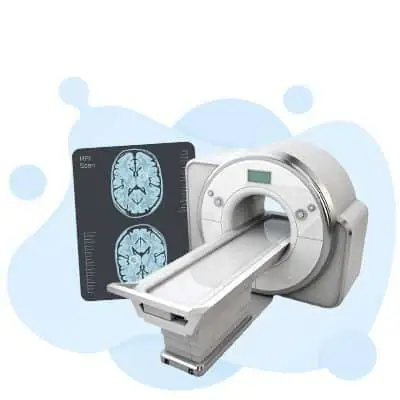
In the world of radiology, the MRSO (Magnetic Resonance Safety Officer) plays a key role. They make sure patients, staff, and the public are safe in MRI settings. This guide covers what MRSOs do, what they need to know, and where they can go in their careers.
FREE MRSO Practice Test Online
Key Takeaways
- The MRSO is in charge of making sure MRI machines work safely and keeping people safe from harm.
- To become an MRSO, you usually need a bachelor’s degree in something like physics, healthcare, or engineering.
- Before becoming an MRSO, you must get special training and a certification to show you know how to follow MRI safety rules.
- Being an MRSO can lead to bigger jobs in hospitals, government agencies, or schools.
- Good attention to detail, strong communication skills, and a focus on keeping patients and staff safe are key for MRSOs.
What is an MRSO (Magnetic Resonance Safety Officer)?
An MRSO, or Magnetic Resonance Safety Officer, is key to keeping MRI equipment and places safe. They make sure safety rules are followed and everything meets standards.
Role and Responsibilities
MRSOs watch the mri zone to keep it safe. They handle mri equipment compliance and report any mri incidents quickly. They also check patients for safety before scans, especially for those with implants.
Educational Requirements
To be an MRSO, you need special training and certifications. This includes learning about mri safety expert practices and getting an ACR accreditation. MRSOs learn how to keep MRI areas safe and follow all rules.
| What Is a Magnetic Resonance Safety Officer (MRSO)? | An MRSO oversees MRI safety policies, screening procedures, and risk prevention within MR environments. |
| Who Should Pursue the MRSO Credential? | This role is suited for MRI technologists, radiology managers, and safety professionals. |
| Why Is the MRSO Role Important? | MRSOs reduce MRI-related incidents by enforcing safety zones and device controls. |
| Where Do MRSOs Typically Work? | They are commonly employed in hospitals, imaging centers, and research facilities. |
| What Topics Are Covered on the MRSO Exam? | The exam covers MRI hazards, safety zones, screening, and emergency response. |
| Does the Exam Include MRI Physics? | Basic physics concepts are included as they relate to safety risks. |
| Is the MRSO Exam Scenario-Based? | Yes, many questions assess real-world MRI safety decisions. |
| Is the Exam Focused on Policy Knowledge? | Policy implementation and compliance are key exam components. |
| How Do You Register for the MRSO Exam? | Registration is completed through an approved MRI safety credentialing provider. |
| How Much Does MRSO Certification Cost? | Costs vary by provider and may include training, exam, and renewal fees. |
| Are There Eligibility Requirements? | Most programs require MRI safety training or relevant experience. |
| Can Exams Be Taken Online? | Some providers offer remote or online testing options. |
| What Is the Average MRSO Salary? | Salary varies by region, facility size, and scope of responsibility. |
| Does MRSO Certification Increase Pay? | Certification can support advancement into leadership or compliance roles. |
| Is the MRSO Role Full-Time? | Some MRSOs work full-time, while others hold the role alongside clinical duties. |
| Is Demand for MRSOs Growing? | Demand continues to grow as MRI safety regulations expand. |
| How Difficult Is the MRSO Exam? | Difficulty depends on prior MRI experience and familiarity with safety standards. |
| What Is an Effective MRSO Study Plan? | Focus on safety zones, device labeling, and emergency procedures. |
| Are Practice Tests Helpful? | Practice questions help reinforce safety concepts and exam readiness. |
| How Should You Prepare Before Exam Day? | Review key topics, complete practice sets, and confirm exam requirements. |

The MRSO (Magnetic Resonance Safety Officer) Career Path
To become an MRSO, you need special training and a certification. You’ll learn about mri technologist training, site planning, and electromagnetic compatibility. You’ll also study mri suite design, mri incident prevention, and mri quality assurance. This training helps MRSOs keep MRI equipment safe and protect everyone around it.
Training and Certification
The American Board of Magnetic Resonance Safety (ABMRS) has the top certification for MRSOs. To get certified, you must pass a tough exam. It checks your knowledge of MRI safety, managing risks, and what to do in emergencies. Many places also offer more training to keep MRSOs current with new rules and ways to work better.
Career Prospects and Advancement
The need for skilled mrso (magnetic resonance safety officer) workers is rising. This is because MRI technology is getting more common in healthcare and safety is more important. MRSOs work in hospitals, imaging centers, and research places. They make sure MRI machines work safely and well.
With more experience, MRSOs can move up in their careers. They might become a lead MRSO, a regional safety coordinator, or a safety consultant for MRI makers or health groups.

MRSO Questions and Answers
An MRSO runs MRI safety policies, supports screening workflows, and reduces preventable MR incidents.
Training, exam fees, rescheduling, and renewals can raise the total cost beyond the base registration.
Policies vary by provider, but many allow a retake without repeating the entire course sequence.
Keep training logs, screening records, incident reports, and policy revisions for audit readiness.
Many programs offer accommodations with approved documentation, so apply early before scheduling.
Training builds knowledge, while credentialing confirms competency through eligibility requirements and testing.
Pricing ranges from low-cost self-study tools to premium courses with instruction and practice exams.
Pay varies by region, facility type, and whether the MRSO role is dedicated or combined with clinical duties.
Yes, MRSO credentials often support advancement into safety, compliance, or radiology leadership paths.
It helps standardize safety controls across teams, rooms, and shift handoffs in busy MRI settings.